Engaging Student Veterans
on Campus
Team Leader & Researcher
Problem: College student involvement promotes positive outcomes. Unfortunately, student veterans have low levels of campus engagement. As a result, they may not be receiving the full benefits of higher education.
Method: I conducted a literature review of quantitative and qualitative studies to identify key characteristics of student veterans and their common barriers to campus engagement. Student veterans face a number of social-based barriers:
-
Stereotyping by civilian peers can result in veterans choosing to only selectively discuss their military experience (Griffin & Gilbert, 2015).
-
Limited awareness or support on campus regarding student veterans’ experiences and multiple associated identities as service members, veterans, and students (Griffin & Gilbert, 2015).
-
Lack of common ground between student veterans and civilian students. 42% of respondents in a survey by the RAND Corporation described finding like-minded students or staff on campus as a moderate or major challenge (Steele, Salcedo, Coley, J., 2010).
-
Lack of validation from faculty, staff, and/or peers (Elfman, L., 2015).
Borrowing from established student development theories on involvement, marginalization, and validation, we took what we learned to establish a working theory for student veteran involvement.
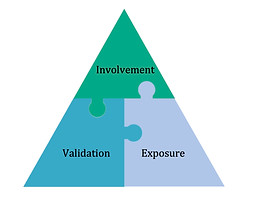
Using this theory as our guide, we created a program (including budget, staffing, materials, timeline, communications, and program assessment) to promote student veteran involvement on campus.
Outcome: This project was completed as part of a course so we did not have the opportunity to implement it or assess its effectiveness. However, we did present our theory and program at NASPA’s Symposium on Military Connected Students. Both theory and program were positively received by higher education professionals who support this unique student population and we provided our program materials to over a dozen campuses to use and adapt as needed.